
The Consequences of Compartmentalization: How Survival Strategies Shape Identity
Apr 15, 2026
IAM™ Research
Author: Claire Elizabeth Grace Pittock Heacock, IAMp™ & 500 RYT
"When compartmentalization is used temporarily, the nervous system eventually returns to processing and integration. But when caregiving, survival, or systemic pressure never lets up, compartmentalization becomes chronic."
Compartmentalization Began as Protection
Compartmentalization is a psychological survival strategy. It allows the mind to separate conflicting thoughts, emotions, or experiences in order to keep functioning under stress. For parents and caregivers, this skill is often essential—at least at first.
You calm your own fear to soothe a crying baby.
You manage exhaustion while showing up for your child.
You set your emotions aside to get through the day.
In early parenting especially, compartmentalization can be a bridge. It helps adults meet their children’s needs even when their internal world is overwhelmed.
The problem arises when that bridge becomes the place we live.
The Hidden Cost of “Holding It Together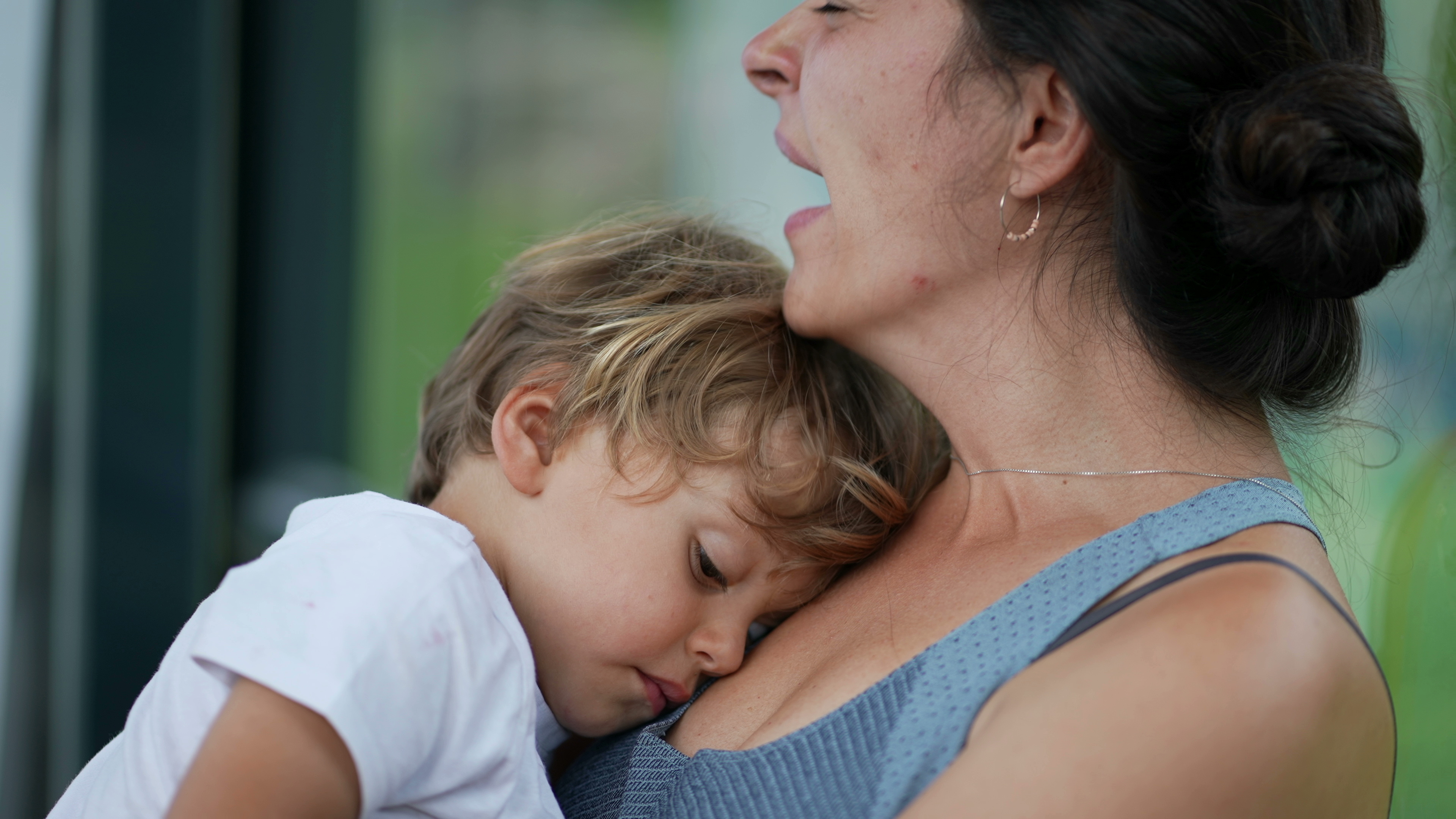
When compartmentalization is used temporarily, the nervous system eventually returns to processing and integration. But when caregiving, survival, or systemic pressure never lets up, compartmentalization becomes chronic.
Psychologically, this can look like:
- Emotional numbing (“I know I should feel something, but I don’t”)
- Persistent anxiety or low‑grade sadness
- Fatigue that rest doesn’t touch
- Difficulty accessing joy, grief, or anger
- Feeling disconnected from yourself while being deeply responsible for others
For parents, this often shows up as functional burnout—you’re getting everything done, but you’re not really there with yourself.
Children rarely see the compartments.
They feel the absence.
Not because a parent doesn’t care—because a parent has been surviving.
Parenting While Compartmentalized
Many caregivers believe they must resolve everything before tending to their children. In reality, most parents are compartmentalizing constantly—and wisely—to meet immediate needs.
The issue isn’t that parents compartmentalize.
It’s that they often don’t get supported in unpacking later.
When emotions stay boxed up for years:
- Parents may react more sharply than they intend
- Patience shortens without a clear reason
- Emotional attunement becomes effortful rather than intuitive
- Children learn to read stress rather than safety
Kids don’t need perfect emotional presence.
They need repair, coherence, and increasing authenticity over time.
Integration—not emotional performance—is what builds security.
Caregiving + Emotional Load
Mothers or Any Primary Caregiver

Women, especially mothers, are disproportionately expected to manage emotional environments: the household mood, children’s feelings, partners’ regulation, and often extended family needs as well.
This leads to layered compartmentalization:
- The patient parent
- The competent professional
- The supportive partner
- The regulated adult
There is rarely a sanctioned space for the whole person.
Over time, this pattern is strongly associated with anxiety, depression, and identity fatigue—not because caregivers are doing something wrong, but because they are carrying emotional labor without integration.
Fathers and Parenting Partners
Men often compartmentalize differently—through emotional suppression rather than emotional load‑bearing. Fathers may stay functional and steady until stress accumulates past capacity, leading to sudden withdrawal, burnout, or emotional shutdown.
In parenting, this can look like:
- Being physically present but emotionally distant
- Difficulty engaging with children’s big emotions
- Feeling unsure how to re‑enter connection once disconnection happens
Different pattern. Same outcome.
Disconnection from self creates distance in relationships.
When Caregiving Roles Shift or Reverse

Caregiving dynamics don’t live only in ideals—they live in real families, across many structures: intact households, separation, co‑parenting, and shared custody. When caregiving roles shift or reverse, the emotional load doesn’t disappear. It changes form—and often becomes harder to name.
Fathers as Primary Caregivers
When fathers become the primary caregiver—whether by mutual choice, separation, necessity, or forced alienation—they often carry emotional labor without cultural permission or support.
This can happen:
- By aligned choice and genuine preference
- When a mother has emotionally or physically withdrawn
- Through separation, custody arrangements, or forced alienation
In these cases, compartmentalization often looks like:
- Hyper‑functioning around logistics and routines
- Emotional suppression to maintain stability
- Grief and anger processed in isolation, if at all
The issue is rarely lack of care.
It is care held inside a narrowed emotional channel.
Without integration, primary caregiving fathers may experience exhaustion, emotional isolation, or sudden collapse—especially when there is no space where they are regulated, seen, or supported.
When the Mother Is the Non‑Primary Caregiver
Role reversal also occurs when a mother is no longer the primary caregiver—sometimes by choice, sometimes by circumstance, and sometimes through manipulation or coercive control.
When this shift is aligned and chosen, particularly in families where fathers are deeply engaged and emotionally present, mothers may step back intentionally. This can be healthy and self‑honoring.
And still, it can carry psychological weight:
- Identity dissonance in cultures that equate womanhood with mothering
- Guilt layered over relief
- Suppressed grief for the family structure once imagined
Here, compartmentalization often takes the form of rationalizing the choice while minimizing emotional complexity.
When the shift is shaped by alienation, coercion, or manipulation, compartmentalization becomes survival‑based and forced. Mothers may split off longing, anger, or maternal identity simply to function. This pattern is strongly associated with chronic grief, trauma responses, and identity erosion—especially when loss is ongoing and unresolved.
For Families Still Together
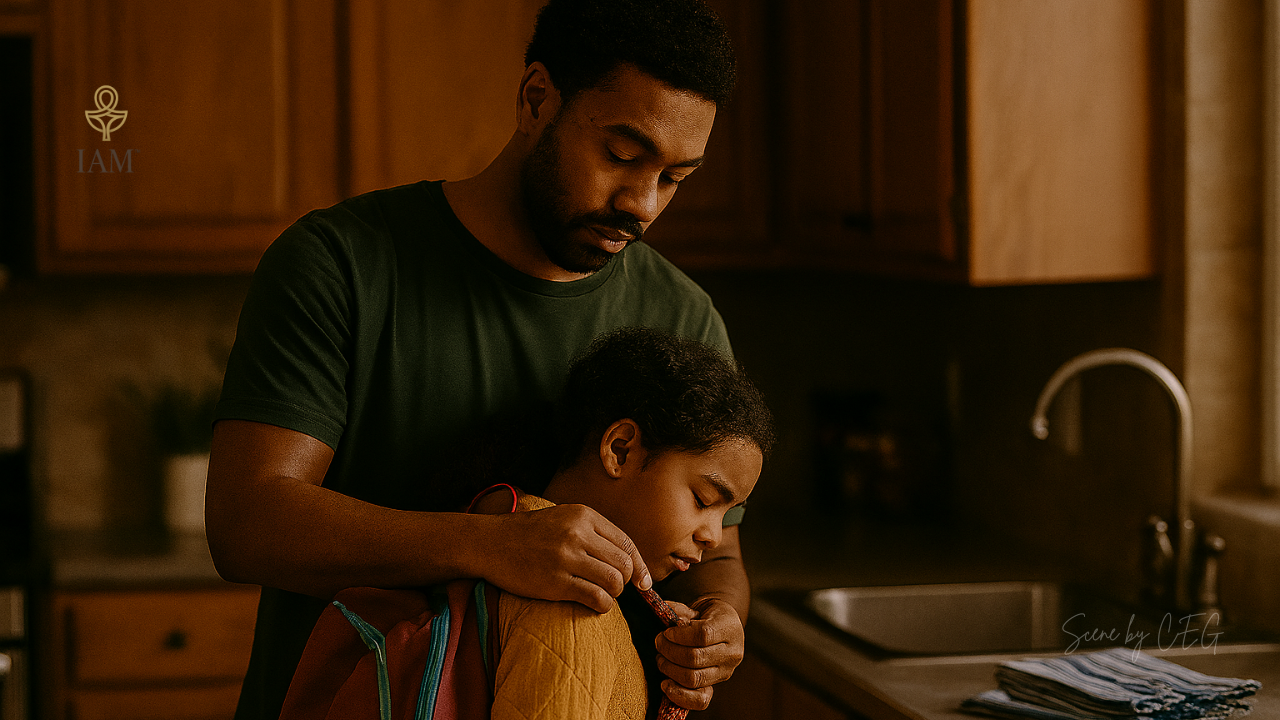
Even in households that remain intact, emotional roles can quietly polarize. One parent may become the emotional container while the other becomes the stabilizer. Over time, both can lose access to wholeness.
Compartmentalization here often goes unnoticed because the family is still “working.”
But children don’t learn emotional health from structure alone.
They learn it from coherence, repair, and integration.
What Remains True Across All Family Structures

Primary caregiving—regardless of gender—always carries emotional labor.
What differs is who is permitted to feel it, name it, and receive support for it.
When caregivers are required to be steady and silent, compartmentalization becomes the only viable option.
Different roles.
Different pressures.
Same consequence.
Disconnection from self eventually creates distance in relationships—unless integration is intentionally supported.
Survival‑Based Compartmentalization

For many BIPOC parents and caregivers, compartmentalization is not just psychological—it is protective and intergenerational.
BIPOC caregivers often manage:
- Racialized stress while parenting
- Monitoring children’s safety in environments not built for them
- Teaching resilience without passing down fear
This often requires separating:
- Anger from daily functioning
- Fear from caregiving presence
- Cultural authenticity from institutional spaces
The psychological cost of this ongoing division is real. Research on racial trauma shows that chronic identity‑based compartmentalization is associated with hypervigilance, exhaustion, and trauma‑like symptoms.
And yet—within families—this same compartmentalization has historically protected children.
This is the paradox: What kept one generation safe can quietly strain the next if it is never allowed to soften.
Healing does not mean abandoning protection.
It means updating it.
Kids Learn What Integration Looks Like

Children do not learn emotional health from perfection.
They learn it from repair and coherence.
When caregivers gradually:
- Name emotions honestly (without oversharing)
- Reconnect after disconnection
- Model self‑reflection rather than self‑erasure
- Allow wholeness instead of performance
Children learn that feelings are survivable, identities are safe, and connection can be restored.
This is how cycles shift—not through doing more, but through being more integrated over time.
Integration Is Not the Absence of Structure
In IAM terms, integration does not mean dissolving boundaries or collapsing roles.
It means:
- Emotions are not permanently exiled
- Identity does not have to fracture to function
- Parenting does not require self‑abandonment
Compartmentalization helped many parents survive seasons that demanded everything.
Integration is what allows families to breathe when survival is no longer the only goal.
IAM™ Reflections
If parenting feels heavier than it “should,”
It may not be because you need to try harder.
It may be because you have been carrying too many parts of yourself alone.
This is where the Integrative Alignment Method™ (IAM™) comes in—not as another task, but as a returning point.

Identify.
Notice where you are compartmentalizing to survive.
Where are you “holding it together” at the cost of your own coherence?
What feels tight, quiet, reactive, or distant in your body or parenting right now?
Align.
Ask what is actually true underneath the strategy.
What do you value here—connection, safety, gentleness, honesty?
What would alignment look like in this season, not in some ideal version of yourself?
Move.
Choose one small action that supports integration, not perfection.
A pause instead of a push.
A repair instead of self‑criticism.
A truth named softly instead of swallowed.
Then repeat.
Because parenting, caregiving, and healing are not linear—they are rhythmic.

And remember this:
Anything you say after “I AM” is instruction.
The nervous system listens.
The body organizes around it.
Identity follows the language you lead with.
When you say:
“I AM overwhelmed,” the system braces.
“I AM failing,” the system contracts.
When you say:
“I AM learning.”
“I AM allowed to integrate.”
“I AM safe enough to soften now.”
You are not just speaking—you are re‑patterning.
Wholeness is not something you earn after caregiving, it is something caregiving deserves; and alignment begins with what you allow yourself to name.
Selected References & Further Reading
- Psychology Today – Compartmentalization
- Psych Central – Compartmentalization and Emotional Health
- Kelly et al., Depression & Anxiety – Gender differences in coping
- Cénat, J.M., Perspectives on Psychological Science – Complex racial trauma
- Williams, D.R., Journal of Health and Social Behavior – Race‑related stress
- Du Bois, W.E.B. – The Souls of Black Folk
SUBSCRIBE FOR MONTHLY NEWSLETTERS
From the Integrative Alignment Method™ News From the Field
We hate SPAM. We will never sell your information, for any reason.