
How to Be Whole While Walking Through Hell
Apr 10, 2026
IAM™ Reflections
Author: Claire Elizabeth Grace Pittock Heacock, IAMp™ & 500 RYT
"Wholeness is the ability to stay connected to yourself, while everything around you is trying to pull you away from yourself."
Lets get real.
There are seasons of life that do not ask for your opinion before they begin. They just arrive.
And suddenly, you are learning how to breathe inside pressure, think clearly inside emotional chaos, and stay anchored when the ground between you and someone else becomes unpredictable.
For me, that has shown up inside co-parenting—not the peaceful kind people imagine in perfect diagrams, but the real-world kind.
The kind where communication breaks down.
The kind where agreements feel inconsistent.
The kind where access to your child becomes something you have to navigate, instead of something that...
...simply flows.
The kind where life brings you to your knees in the middle of the bathroom, and then the living room, and then the bedroom floor...
And still… life keeps asking you to be whole.
So what does “wholeness” even mean when you are standing inside something that hurts?
Not perfection.
Not pretending.
Not spiritual bypassing.
Wholeness is the ability to stay connected to yourself while everything around you is trying to pull you away from yourself.
It is learning how to remain intact; even when your circumstances are not.
1. Inhale
Wholeness is not the absence of pain; it is the integration of it.
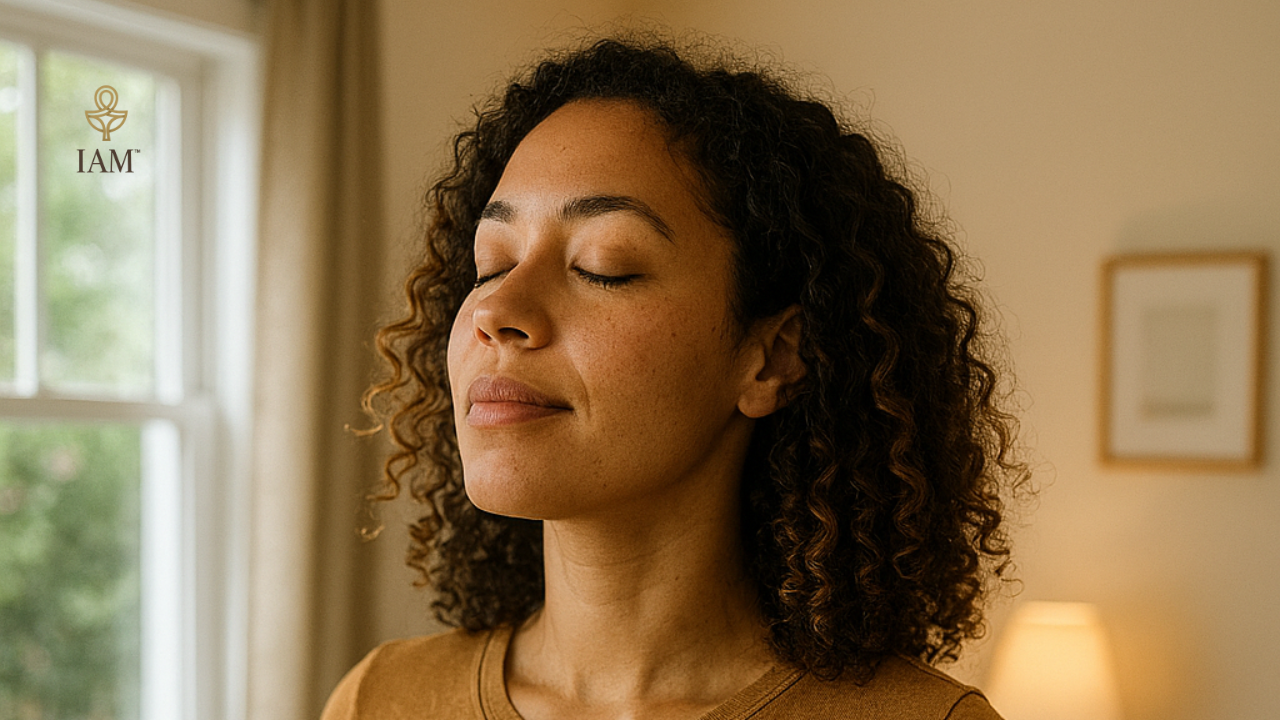
One of the biggest illusions we are taught is that healed people don’t hurt.
Except that wholeness is not the removal of grief.
It is the refusal to abandon yourself inside it.
You can be devastated and still grounded.
You can be angry and still centered.
You can be in conflict and still aligned.
The goal is not emotional numbness.
The goal is internal stability.
2. Exhale.
Separate the situation from your identity

When parenting conflict happens, it can start to feel personal. Like your value is being measured in access, response time, or cooperation.
Your identity is not the situation - the situation is a system interaction.
Your identity is deeper than that.
So you begin practicing a quiet inner separation (include tapping if it feels helpful):
- “This is happening”
- “And I am still me”
- “My worth is not on trial inside this moment”
This is how you stay intact.
3. Repeat.
Returning to your internal center (again & again)
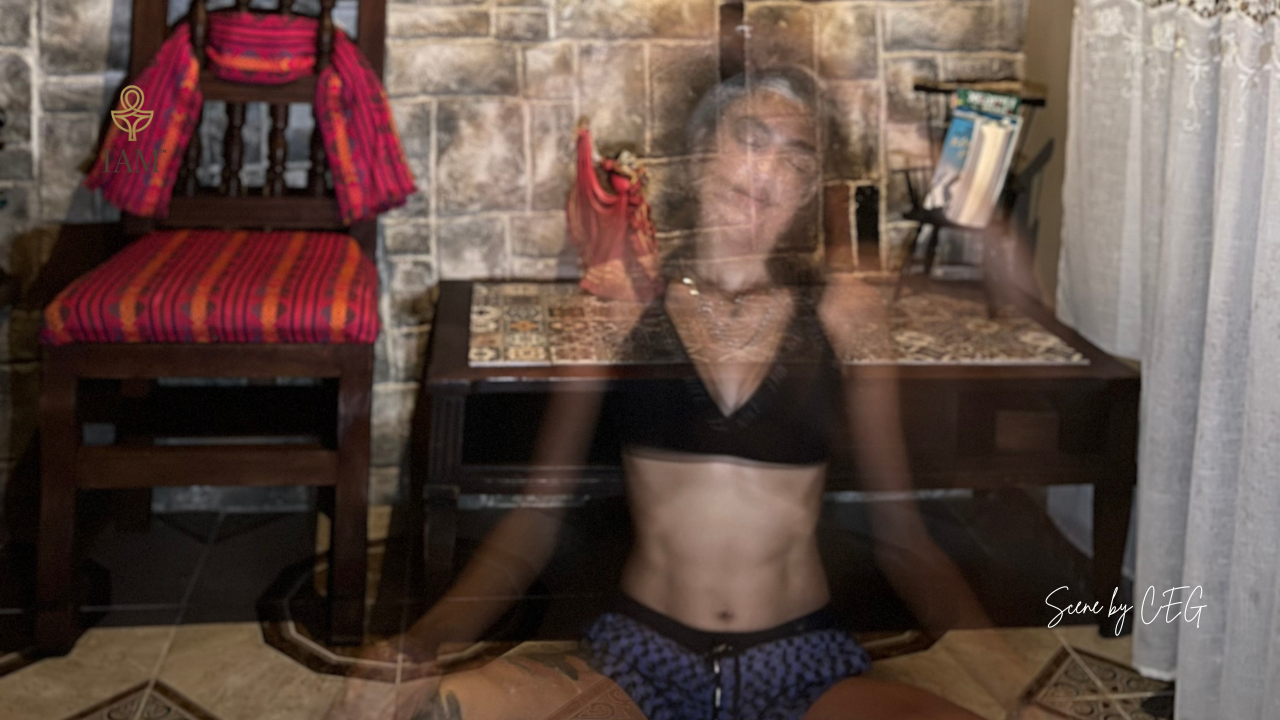
When things feel unstable externally, your nervous system will try to find control anywhere it can. Except that control is not the same as grounding.
Grounding is:
- eating something warm
- letting your body exhale fully
- touching something real (water, earth, fabric, breath)
- choosing one next right step instead of the whole future
Wholeness is built in repetition, not intensity.
You don’t “arrive” at calm.
You return to it.
4. Stop.
...abandoning your present moment for the outcome

One of the deepest emotional traps in conflict is living in the future:
- “When this is fixed…”
- “When communication improves…”
- “When everything is stable…”
Yet your life is still happening now.
Your child still needs you now.
Your body still needs you now.
Your spirit still needs you now.
So you learn to ask:
“What can I do in this moment that keeps me whole?”
Not what fixes everything.
What keeps you intact.
5. Let Go.
...of what you cannot control.
Let alignment be your anchor, not the outcome
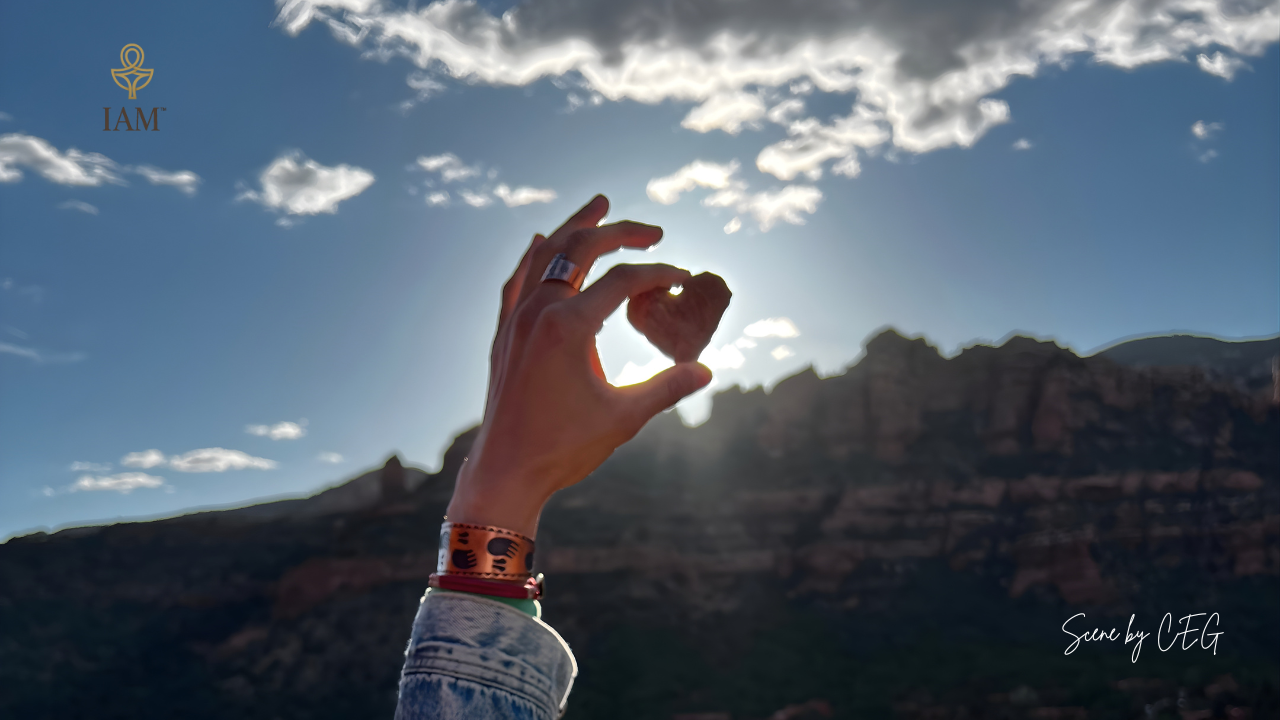
Alignment becomes your internal compass when external systems feel inconsistent.
It sounds like:
- I respond instead of react
- I document instead of spiral
- I pause instead of escalate
- I protect my peace without abandoning my truth
- I stay connected to love even when the situation is not loving
Alignment is not passivity.
It is precision under pressure.
Placing It Down
Across cultures and throughout history, people have used ritualized, physical acts to externalize worry, grief, or fear—placing it into an object and then consciously setting it down.
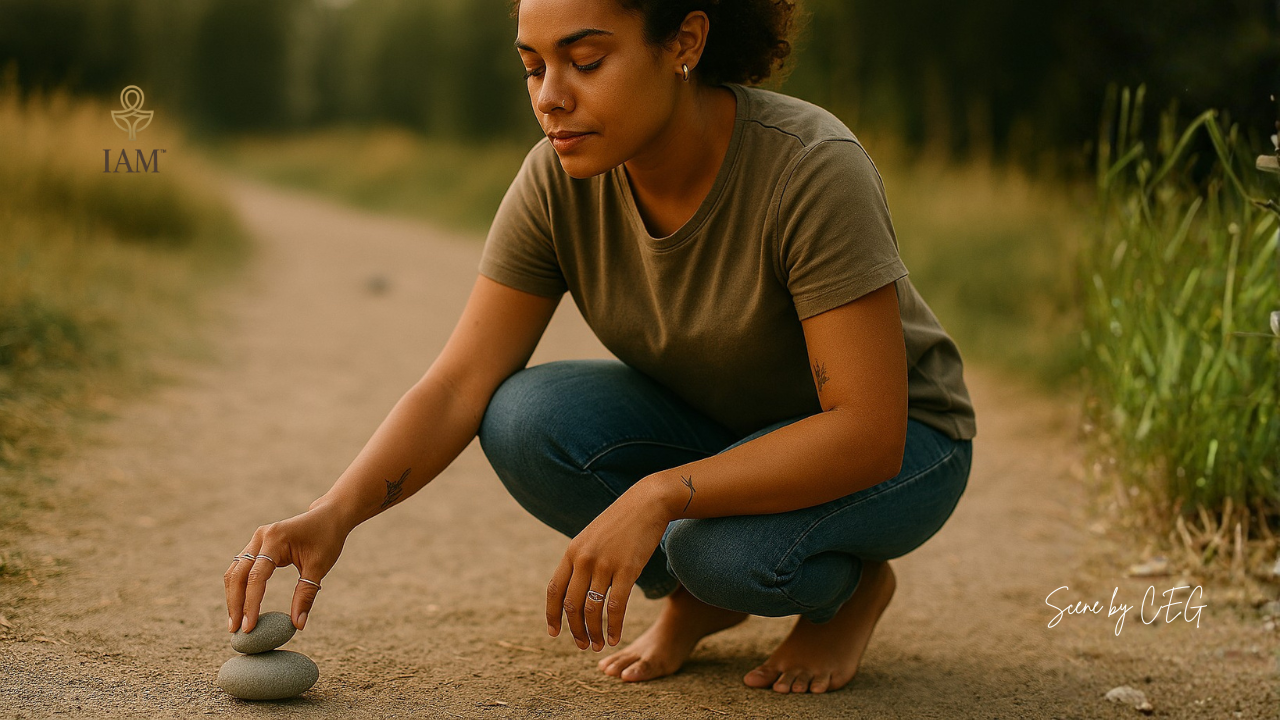
This practice appears in many forms:
-
In Japan, contemplative traditions have long used objects (including stones) in practices influenced by Zen and Shinto, where burdens are named, held, and physically released as part of non‑attachment rituals tied to emotional regulation and acceptance.
-
Across many Indigenous nations in North America, stones are used in grief, prayer, and transition rituals as temporary carriers of emotion—objects that hold what is too much for the body before being returned to the land.
-
In Celtic and Northern European traditions, people marked thresholds, burdens, and transitions by placing stones at crossroads or paths, symbolizing the conscious completion of one internal state before walking forward.
While the forms differ, the mechanism is the same:
move the burden from the abstract mind into a tangible object, then leave it behind.
Modern psychology supports what these cultures already knew.
What the Research Shows
1. Ritual and symbolic action reduce anxiety and stress.
A large body of psychological research shows that ritualized actions—especially those involving repetition and symbolism—reduce anxiety and improve emotional regulation, even when the actions have no practical “fixing” function. These effects show up in both self‑report data and physiological markers such as stress arousal. [faculty.ha...rkeley.edu], [researchgate.net]
2. Externalizing a problem reduces rumination.
In narrative psychology, a core therapeutic technique is externalization—separating the problem from the self (“the problem is not me”). This approach consistently reduces self‑blame, cognitive fusion, and emotional overwhelm, and increases a person’s sense of agency and stability. [psychology.town]
3. Physical rituals calm the nervous system.
Studies on ritualized behavior show that physically placing attention into an object or action occupies the brain in a way that interrupts intrusive thought loops, lowers physiological stress responses, and helps the nervous system return to baseline. [researchgate.net], [link.springer.com]
4. Body‑based and symbolic practices can lower cortisol.
Research examining spiritual, ritual, and somatic practices shows changes in stress hormones (including cortisol), supporting the idea that the body responds differently when release is enacted, not merely thought about. [link.springer.com], [woc.greenp...blisher.id]
Why Practices Like This Are Often Dismissed

Practices such as stone‑placing, ritual release, or embodied letting‑go are sometimes labeled unscientific or alternative, not because they lack evidence, but because they do not align well with pharmaceutical or scalable medical business models.
They are:
- low‑cost
- self‑directed
- difficult to patent
- culturally diverse rather than standardized
Modern healthcare systems tend to invest most heavily in interventions that are repeat‑prescribable and profit‑sustaining, not in practices that reduce dependency on external treatment. This doesn’t make medication inherently wrong — but it does explain why simple, embodied regulation practices receive less institutional attention despite measurable benefits.
And yet, they persist.
Because they work.
Letting Go Is Not Passive
Placing a worry into a stone and walking away isn’t denial.
It is somatic discernment.
You are not saying the burden never mattered.
You are saying it no longer gets to live inside your body.
So you place it down.
You step away.
And you keep your alignment — even when the situation has not aligned for you.
6. Grieve
This is part of wholeness too
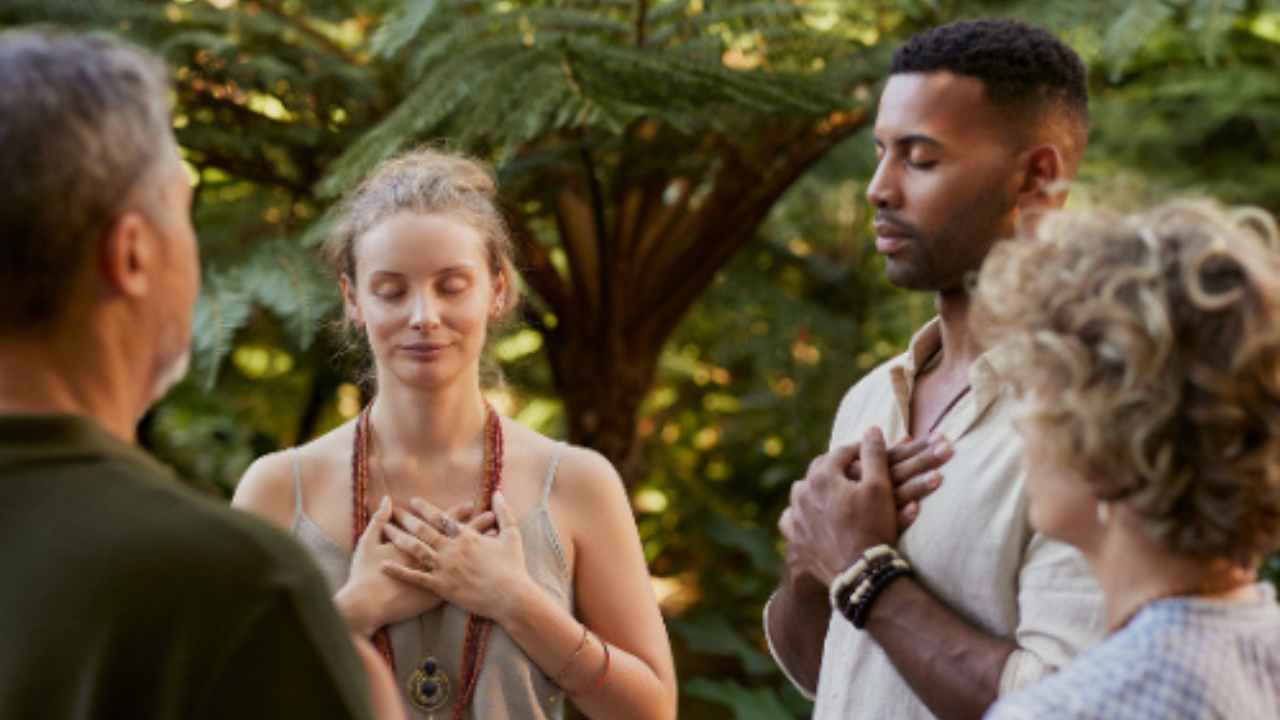
There is grief in losing ease.
There is grief in broken communication.
There is grief in watching systems fail to hold what matters most to you.
Let it exist without making it your identity.
Grief is not a collapse.
It is a release of love that has nowhere to go yet.
Wholeness is not a destination you reach after the storm,
it is the way you hold yourself inside the storm.

Not hardened.
Not erased.
Not fractured beyond return.
Present.
Breathing.
Still here.
Still you.
Even now.
Oneness & Alignment,
CEG
SUBSCRIBE FOR MONTHLY NEWSLETTERS
From the Integrative Alignment Method™ News From the Field
We hate SPAM. We will never sell your information, for any reason.